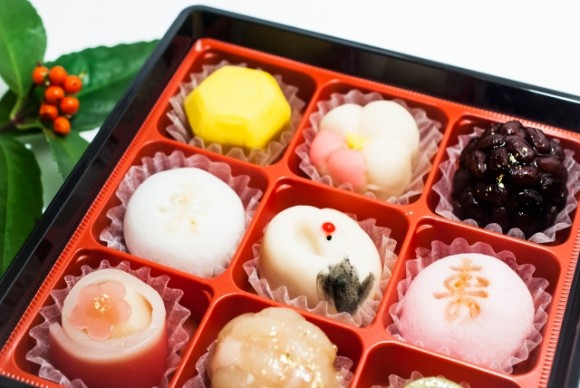
Wagashi are a uniquely Japanese style confectionary often served with teas, though they are particularly associated with green tea and the tea ceremony. The types of wagashi are many, and the artistry that goes into making and presenting these Japanese sweets is often celebrated for its seasonal motifs. Wagashi uses natural ingredients derived from plants, including: mochi (a soft cake made from pounded sweet rice powder), adzuki beans and paste, shiro-an (white beans), natural sugars, kinton (chestnut paste), fruits and nuts, sweet potato, and many more. Preparation uses mainly simmering and steaming procedures, though not exclusively.
Categories
For gifts and souvenirs, it helps to know the three classifications of wagashi. Namagashi (lit. fresh wagashi) is made daily and has a moisture content of 30%, which affects shelf life. If you can get your souvenir home or to its intended recipient within 48 hours, this is the best type to buy. Han namagashi, on the other hand, contains between 10-30% moisture, so will keep a little longer and, finally, higashi (dry confectionary, including senbei rice crackers) contains 10% moisture or less, and will keep for much longer. If in doubt, check the sell-by date when you buy.
8 Recommended Wagashi for Japanese Souvenirs!
1. Youkan

simple and elegant, these bars of adzuki bean paste gelled with sugar and agar-agar are one of the oldest types of wagashi.
2. Daifuku

also very simple and universally liked, this smooth mochi cake is filled with anko (sweet adzuki bean paste).
3. Sakuramochi

a delicately pink-colored, slightly course rice cake filled with anko and wrapped in a pickled cherry leaf.
4. Zangetsu

a light ginger-flavored pancake folded over an smooth anko filling.
5. Monaka

here, the anko is sandwiched between, or encased by two thin, crisp rice crackers which are often moulded with seasonal motifs from nature.
6. Manju

these incredibly popular steamed cakes may be filled with a variety of red or white sweet bean pastes, chestnut or fruit pastes, and even sweet potato purée. The surrounding pastry is made with soba wheat flour and rice flour mostly. A popular variety is coloured and flavored with macha (green tea powder). Manjū come in various shapes, some representing fruits or even animals.
7. Hanabiramochi

flattened red and white mochi wrapped around an anko and candied burdock filling.
8. Namagashi

the variety of these freshly made speciality sweets is extensive and reflects both the skill of individual makers, the area of origin and the current season, incorporating natural motifs like leaves and flowers. Yet one of the most popular and inexpensive types is nama yatsuhashi, simple flattened mochi folded over an anko filling. Though a popular souvenir of Kyoto, nama yatsuhashi can readily be found at most airport duty free and souvenir shops.
Conclusion
As always, I am drawing on my personal favorites for the above list, but also thinking which wagashi are likely to survive a long aeroplane journey. It may be best to make wagashi one of the last things you purchase as you leave Japan, and both Narita and Haneda airport terminals have wagashi souvenirs to suit all pockets. At Narita, look for Tokyo Shokuhinkan at both terminal 1 and 2. It carries a range of wagashi from several makers, including the renowned Toraya.
At Haneda International Terminal Building, look for Zunda Saryo in the Edo Marketplace on the 4th floor; their sweet edamame confections are wonderful, especially the zundamochi! And if you are looking for souvenirs for children, the Hello Kitty shop of the 5th floor has very cute Hello Kitty cream daifuku.
8 Recommended Wagashi for Japanese Souvenirs!
1. Youkan
2. Daifuku
3. Sakuramochi
4. Zangetsu
5. Monaka
6. Manju
7. Hanabiramochi
8. Namagashi
Related posts:
 6 Recommended Japanese Snacks For Souvenirs!
 7 Best-Selling Japanese Souvenirs for Kids!
 7 Useful Tips to Enjoy Daifuku in Japan!
 8 Traditional Anko Desserts You Should Try in Japan!
 7 Traditional Ways to Eat Mochi in Japan!
 15 Fave Japanese Desserts of Japanese Guys
 8 Recommended Oden You Should Try in Japan!
 8 Recommended Onigiri You Must Try in Japan!


